

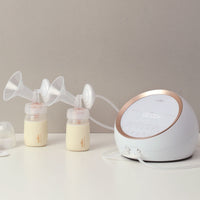



Breast Pump & Bottle Sterilization: Your Essential Guide to Safe Practices
Ensuring Your Baby's Health: The Importance of Proper Sterilization
As a parent, ensuring your baby's health and safety is paramount. With their immune systems still developing, proper cleaning and sterilization of feeding equipment like breast pumps and baby bottles are not just important—they are critical. At Miss Mama, we understand the concerns and questions that arise regarding the best sterilization methods. The market offers a plethora of options, from traditional boiling to advanced UV sterilizers, often leading to misconceptions that more expensive or 'high-tech’ solutions are always superior. However, this isn't always the case, especially when it comes to UV sterilizers and sterilizing tablets.
Miss Mama is here to demystify these methods, providing you with clear, concise, and accurate information to help you make informed decisions for your little one.
Understanding Sterilization Methods

1. Boiling/Hot Water Sterilization: The Traditional and Reliable Method
This time-honored method, passed down through generations, remains one of the most effective ways to sterilize baby feeding equipment. By immersing thoroughly cleaned parts in boiling water for 5-10 minutes, you can effectively eliminate most bacteria and viruses.
Advantages:
•Chemical-Free: Absolutely safe for your baby as it involves no chemical residues.
•Highly Effective: Provides robust sterilization, suitable for daily use.
•Versatile: Compatible with most breast pump components and baby bottles.
Considerations:
•Temperature and Duration: Insufficient heat or boiling time will compromise sterilization effectiveness.
•Material Wear: Prolonged and repeated exposure to high temperatures can cause some silicone or plastic parts to age prematurely or deform.
⚠️Miss Mama Tip: Consider alternating boiling with steam sterilization to extend the lifespan of your equipment parts.

2. Steam Sterilization: A Modern Parent's Preferred Choice
Steam sterilizers are a popular choice among contemporary parents due to their efficiency and convenience. This method utilizes 100°C steam to sterilize, offering a chemical-free and time-saving solution.
Advantages:
•High Efficiency: Powerful sterilization effectively eliminates germs.
•Chemical-Free: Ensures safety without the use of harsh chemicals.
•User-Friendly: Simple and quick operation.
Considerations:
•Regular Cleaning: The sterilizer unit requires periodic descaling and cleaning to maintain optimal performance.
•Material Compatibility: Some breast pump parts are not heat-resistant and should be sterilized separately or cleaned using alternative methods.
❤️Ideal For: Parents who frequently use baby bottles and breast pumps daily, seeking a convenient and effective sterilization solution.

3. UV Ultraviolet Sterilization: Why Many Breast Pumps Advise Against It
This is perhaps the most misunderstood sterilization method. Many believe that UV sterilizers are the most advanced and therefore the most effective. However, this is a common misconception.
More accurately, UV sterilization is a **disinfection** method rather than a true sterilization method. While it significantly reduces bacterial load, it may not achieve complete eradication of all microorganisms.
How does UV sterilization work? UV sterilizers use UV-C ultraviolet light to damage the DNA structure of bacteria and viruses, preventing them from reproducing. While this sounds highly effective, there's a significant limitation:
⚠️ UV light can only sterilize what it directly illuminates. Areas such as the intricate valves of breast pumps, the inner surfaces of teats, and small crevices or corners often create
shadowed areas that UV light cannot reach. This means:
❌ Areas not exposed to UV light = potential bacterial survival.
Therefore, UV sterilization is more akin to "surface disinfection" rather than complete sterilization.
⚠️ Crucially: UV exposure accelerates component degradation!
Many breast pump components are made from materials like silicone, TPU, or transparent plastics. Prolonged exposure to UV light can rapidly lead to:
❌ Yellowing
❌ Hardening
❌ Loss of elasticity
❌ Compromised sealing
❌ Reduced suction power
❌ Increased risk of leaks or damage
❌ Hardening
❌ Loss of elasticity
❌ Compromised sealing
❌ Reduced suction power
❌ Increased risk of leaks or damage
Some parts may show significant degradation within just a few days of UV exposure.
This is precisely why many original equipment manufacturers (OEMs) explicitly state:🚫 Do not use UV sterilizer!
At Miss Mama, we strictly prohibit the use of UV sterilizers with our rental breast pumps. This policy is in place to protect the integrity and performance of the equipment, ensuring that every mother receives a device in optimal condition. 💛

⚠️They are not recommended as a primary, daily sterilization method.

At Miss Mama, we strictly prohibit the use of UV sterilizers with our rental breast pumps. This policy is in place to protect the integrity and performance of the equipment, ensuring that every mother receives a device in optimal condition. 💛
4. Sterilizing Tablets: A Convenient Option for Emergencies?
Can sterilizing tablets effectively sterilize? The answer is: ✅ Yes, but it is a form of chemical sterilization.
How do sterilizing tablets work? These tablets primarily contain sodium hypochlorite, which, when dissolved in water, creates a diluted bleach-like solution that chemically eliminates bacteria.
⚠️ Why is it not recommended for long-term use?
While effective, chemical sterilization presents several concerns:
•Strong Chemical Irritation: High concentrations can irritate the skin, cause silicone to whiten or become sticky, and accelerate plastic aging.
•Incompatibility with Certain Parts: Some breast pump brands specifically advise against chemical disinfectants due to potential adverse effects on component lifespan.
•Thorough Rinsing is Essential: After using sterilizing tablets, it is imperative to rinse all parts thoroughly with ample clean water at least twice to prevent chemical residue ingestion by the baby.
When are sterilizing tablets suitable?
✔️ Travel
✔️ Outings
✔️ Situations without hot water or electricity
✔️ Temporary emergencies
✔️ Travel
✔️ Outings
✔️ Situations without hot water or electricity
✔️ Temporary emergencies
⚠️They are not recommended as a primary, daily sterilization method.
Miss Mama’s Gentle Recommendations 💛
✔️ Daily Recommended: Boiling or steam sterilization – the most reliable and safest options.
✔️ Sterilizing Tablets: Best reserved for short-term emergencies.
✔️ UV Sterilizers: More suitable for "dry storage" purposes; strongly not recommended for breast pump components!
✔️ Sterilizing Tablets: Best reserved for short-term emergencies.
✔️ UV Sterilizers: More suitable for "dry storage" purposes; strongly not recommended for breast pump components!
Many parents equate convenience with superiority, but choosing the right sterilization method, compatible with the material of your equipment, is crucial for both extending the lifespan of your breast pump and safeguarding your baby’s hygiene. ✨
Because proper sterilization isn't just about cleanliness; it's about protecting every precious drop of your breast milk. 💕
We hope this guide has been helpful to all mothers! If you found this information useful, please like and share it with other mothers who might benefit.